Wednesday, April 29, 2026

Loading the train to Hohenfels

In January 1978 we loaded our mechanized infantry battalion vehicles on a train to make the journey to the Hohenfels training area. Our kaserne was in Goeppingen, FRG,  a small town southeast of Stuttgart in southwest Germany. To avoid traffic, we rumbled in the early morning through the silent streets of the city to the railhead. When we arrived we saw a long row of flatbed rail cars for the vehicles and passenger cars for the infantry.

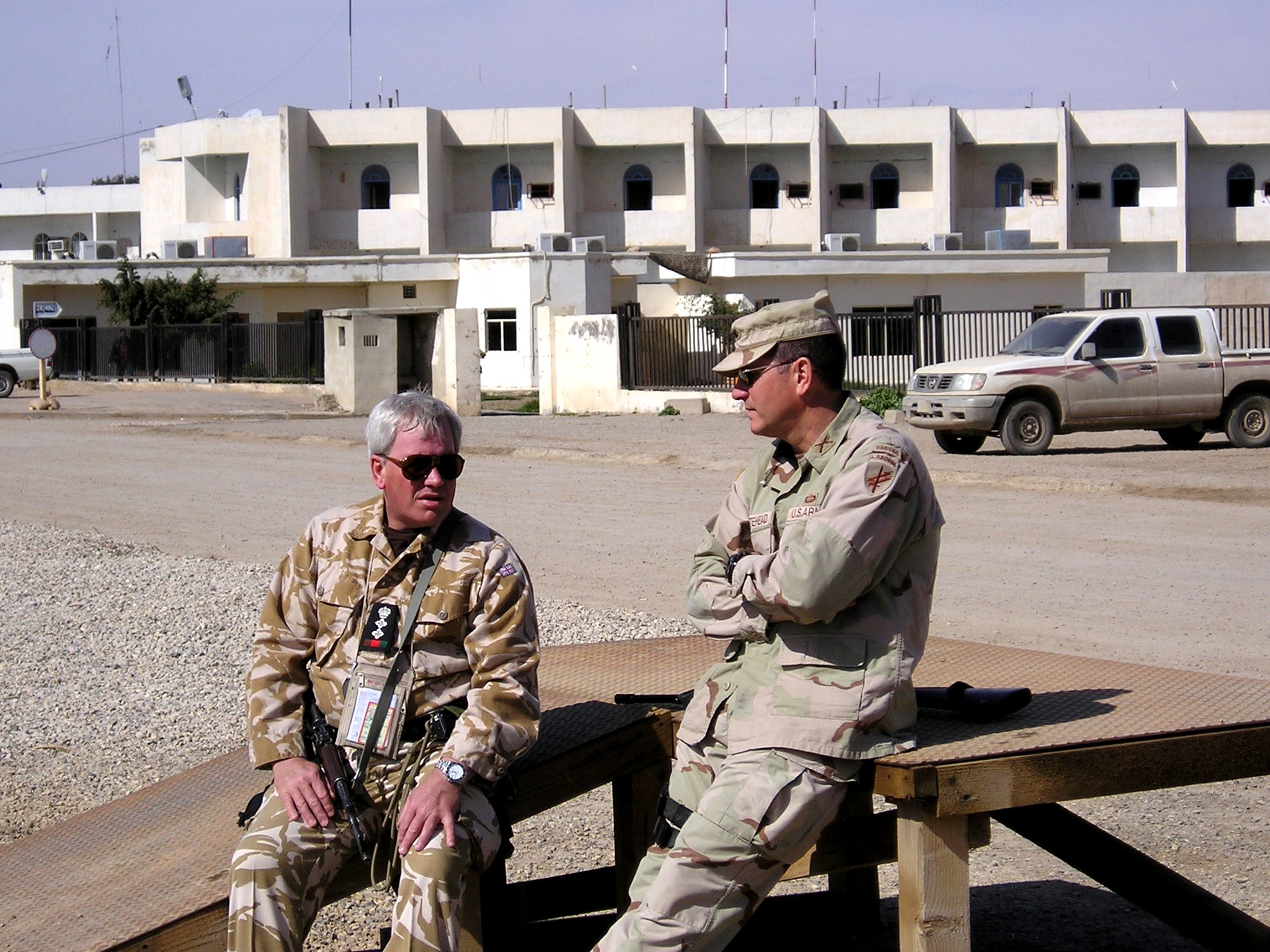
In the motor pool of the 1/26th Infantry, Goeppingen, Federal Republic of Germany, in 1978. Lt Whitehead, Platoon Leader, is on the right.

That is what we were, infantry. I was the Weapons Platoon Leader for Bravo Company, 1st Battalion, 26th Infantry Regiment of the fabled 1st Infantry Division, known as the Big Red One. The joke that we heard too often was “If you to be one, be a big, red one.” 

This being January in Germany it was cold, so we were ready to get on with the business of loading the train so that we could go sit in the warm passenger cars. The Federal Republic of Germany (FRG) was commonly called West Germany in the days when there was an East Germany and a wall through the middle of Berlin. The 7th Army and US Army in Europe, with over 200,00 troops, was comprised of the V and VII Corps, with two Armored Divisions (the 1st and 3rd), two Infantry Divisions (the 3rd and 8th) plus the 1st Infantry Division (Forward). We were the trip wire on the Russian Front if the Warsaw Pact horde was to pour across the border.

At the end of the train was a loading ramp. The first M113 Armored Personnel Carrier (APC) in the 1st Platoon  of Alpha Company edged up the loading ramp and on to the last flatbed car in the train. The drivers head poked from a hatch at the top left front of the vehicle. The vehicle commander, in a hatch at the top center of the vehicle, was exposed from the waist up. Both wore helmets, which they used to communicate with each other by intercom over the roar of the diesel engine positioned to the right of the driver. A ground guide stood in front, ready to lead the vehicle forward.

With over 100 armored vehicles in the battalion, and dozens of wheeled vehicles, there were close to a hundred flatbed rail cars stretched into the distance.  The Alpha Company APC had to drive the length of the train. I noticed that the tracks of the vehicle hung 6 inches over the side of the flatbed on each side.

Loading the train was a job for the enlisted men and non-commissioned officers. The officers were spectators. When the APCs reached their designated spot on the railcar, the crew pulled out the tie down equipment. The men worked with speed and confidence, demonstrating that they had done this before. A large wooden block was positioned at the front and the rear of each track. With hammers and large nails, the blocks were secured to the rail car. Crossed tie down cables in the front and the rear completed the task. 

When the troops had completed their work, I wondered if we could leave the cold night for the warm embrace of the passenger cars. But we were not finished. The train load had to be inspected by a sturdy, middle-aged representative of the German Bundesban. His blue coat and hat signaled his position and responsibility. From one end of the train I watched as he walked beside the rail cars, accompanied by our S-4 Supply Officer. His pace was neither fast, nor slow, but methodical. I wondered if he was going to inspect the tie downs of every vehicle. Indeed, he was, and he did.

When he finished, the signal was given, and we boarded the train. When we got to Hohenfels, there was snow on the ground.

Tuesday, December 09, 2025

Working a disaster in Alaska

On the evening of October 14th I was sitting in my living room thinking about going to bed soon. It was 9:30. I glanced at my Red Cross phone and saw a text from my boss:

“We have to write an advance operational plan before we go to bed tonight.”

My job at Red Cross National Headquarters is to write Red Cross deployment plans for large operations. I don’t normally have to do this on such short notice. And 10:30 is my normal bed time. Adrenalin would keep me awake for the next 3 hours.

I spent two days helping to open one of the two congregate shelters in Anchorage
to house the incoming evacuees.

The week prior a typhoon struck western Alaska and severely impacted three native Alaskan villages. These villagers lived in traditional societies in which they hunted and fished over the summer and then ate what they had stored through the winter. The storm surge and wind damaged or destroyed many of their homes, as well as the supplies they needed to survive over the winter.

No government can make any citizen evacuate when they do not want to. In Florida, where I worked many hurricane disasters, people who needed to evacuate wouldn’t leave and people who didn’t need to evacuate would. The native Alaskans decided that they needed to evacuate and requested assistance.

The state of Alaska decided to fly the people who wanted to leave to Anchorage where they could be cared for. The state of Alaska asked the Red Cross to assist in caring for these evacuees in Anchorage. The request from the state took several hours to be translated into a text message that ended on my Red Cross phone.

I went to my office in my house to call my boss to ask him what was going on.  His phone was busy, of course. I’ve done many of these plans, so I pulled up the template and began preparing to write the plan when I got the necessary information.

When my boss called, I was ready. He told me that we needed to resource a disaster relief operation in Anchorage that could shelter 2000 people at two locations. I started writing the plan and when I finished, I asked if I could go to Anchorage to support the operation

He told me yes.

At noon the next day I was at Dulles airport for a 2 1/2 hour flight to Minneapolis and then a six hour flight to Anchorage. Flying from the East Coast to Anchorage is like trying to fly to Frankfurt. Germany. Takes a long time.

I arrived in Anchorage at 6:30 PM. This was 10:30 PM Eastern time and I was already having to adjust my bedtime two days in a row. I got the opportunity to go to the first shelter that had been established at the University of Alaska in Anchorage.

The next morning, I reported to work to do my job of writing plans for the next day for the disaster relief operation. My plans were changed when we were told that a second plane load of native Alaskans was due to arrive in several hours in Anchorage and we needed to go to the Egan Convention & Civic Center downtown and help establish a second shelter.

As they say in the Red Cross, everyone is a shelter worker. Everything in Anchorage, I discovered, is 15 minutes away by vehicle. I parked on the street next to a meter and returned eight hours later to find that I had a parking ticket. A week later I called the city of Anchorage, begged forgiveness, and they gave it to me.

I was one of the first people to arrive at the Egan center. We were expecting 200 evacuees in several hours. Fortunately for the evacuees and the American Red Cross, a highly experienced shelter manager was coming to supervise me and the other Red Cross people who were arriving at the shelter. I have worked in many shelters before but never had to establish such a large shelter under such a tight deadline.

A lot of resources - cots, shelter workers, snacks, medical staff - were heading for the Egan Center and I wondered whether the evacuees would get there first. Our shelter manager knew what to do. We toured the building with the facility manager and came up with a plan. All of the bathrooms were on the bottom floor so we decided to make those conference rooms the dormitory, or sleeping area. 

We would guide the evacuees off the buses when they arrived to a large conference room on the first floor where we had tables, chairs, drinks and snacks. When the cots were set up in the dormitory we would direct them downstairs.

Dozens of local volunteers arrived to help set up the cots. Only, the cots were on a truck and heading our way. When will the the cots arrive? I asked over my cell phone. “Soon,” I was told.

The buses arrived in front of the Center and the evacuees poured into the first floor. We were there to direct them to the nice dining area we had set up, where they could sit down, relax, have a drink and some snacks. What we had not foreseen was that more than half of them were in urgent need of a bathroom.

Best laid plans. They had been on a C-17 flight from Bethel to Anchorage. At the airport they were immediately loaded on buses for the short trip to the Egan Center. Neither one of these conveyances had bathrooms.

Fortunately, in the middle of the first floor was an escalator to the ground floor and the bathrooms. For many of the evacuees this was a day of firsts. Their first trip on a C-17 transport plane then their first trip on an escalator. The escalator was so fascinating to the children that, in the subsequent days, we became concerned for their safety and had to post Red Cross volunteers to steer them away.

The next 4 hours I interviewed evacuee families and entered their information into the Red Cross shelter registration system. I sat at a desk near the dining area with the head of the household seated in front of me. As I entered the information into my Red Cross computer a line of native Alaskans formed, waiting their turn.

I finished the registration job as the night shift of Red Cross shelter workers arrived at the Egan Center. Several members arrived straight from the airport, their luggage in hand. As more volunteers flew in the next morning their were also sent to the Egan Center and University of Alaska shelters to staff the day shifts.

With the shelter established and staffed I returned to my regular job of preparing incident action plans for the headquarters. In the coming weeks I was able to assist in the planning to move the evacuees from their congregate shelters to hotels as well as our plan to assist with the distribution of emergency supplies to those individuals still remaining in the impacted communities in Western Alaska.

My work station at the relief operation headquarters where I helped prepare operational plans.

This was another great Red Cross deployment for me in that I was able to work directly with the affected clients and I learned a lot that will help me with my job at national headquarters.

In my third week in Alaska I volunteered to help move the evacuees and their luggage from the congregate shelters to the hotel rooms that the State of Alaska contracted for them.


Sunday, December 15, 2024

The Fall of Damascus vs The Fall of Baghdad

This week I watched the televised accounts of the fall of Damascus and the overthrow of the Assad regime with interest and a considerable level of emotion. The scenes all reminded me of the fall of Baghdad in April 2003.

Iraqis gathered around the ruined status of Saddam in Firdos Square, Baghdad, on April 13, 2004

On April 9, 2003, in a spectacle that was televised throughout the world, the Iraqi populace, with some help from the U.S. Marines, toppled a statue of Saddam Hussein in Firdos Square in central Baghdad. On April 14, 2003, 5 days later, I arrived at the Palestine Hotel overlooking Firdos Square to find the remains of the statue. The details of my trip and visit to Baghdad are described in my memoir of the Iraq war, Messages from Babylon.
The front of the Palestine Hotel overlooking Firdos Square, where I spent the night.

Several televised news accounts from Damascus got my attention. The first was an interview with some police officers in Damascus who were directing traffic. The regime police, along with their army, had melted away after the lightning overthrow of the government. The interviewed police officers, wearing police uniforms, said that they had recently been brought in from rebel held areas. This wasn’t a spontaneous action. The introduction of outside police and the use of the rebel forces to secure government buildings was planned.

I think when the rebels started the offensive they knew that the regime would fall and they made preparations to assume control of the city and provincial governments.

Contrast that to how the U.S. military assumed control of Baghdad in April 2003. I was one of about 1,500 U.S. Army Civil Affairs Reservists who were mobilized and sent to Ft. Bragg, NC in February 2003. I assumed - we all assumed - that our mission was to be part of a military government of the populace when the Saddam regime was overthrown.

Members of my unit in Ft. Bragg, NC in March 2004 preparing to deploy to Iraq.

We also knew that this wasn’t going to be like the 1991 Gulf War, when the U.S. military occupied the southern half of the country but left Baghdad unoccupied and Saddam still in charge. Saddam, part of the Sunni minority that ran the country, used his military to slaughter the Shia uprising that was a consequence of our invasion. I read the U.S. invasion plan and our mission was to enter the country and remove the Saddam regime.
Members of my unit in Ft. Bragg, NC in March 2004 preparing our vehicles for deployment to Iraq.

The invasion plan had scant information about what we were supposed to do once Baghdad fell. When I arrived in Ft. Bragg we searched for information about what we were supposed to do once we got to Iraq. From somewhere I obtained a U.S. Army plan, dated December 1944, for the occupation of Germany. This was a good plan, with a lot of specifics actions to be taken by the occupying forces.

“This is great,” I thought. “Why don’t we use this?”

In contrast to what happened in Damascus, when Baghdad fell the Iraqi populace invaded and destroyed the principal government ministry buildings. The institutional memory of how to administer the country was eliminated. This was an inauspicious beginning to our stay in Iraq.

The BBC carried an interview with the new provincial governor in Damascus. He was a civil engineer who had been a part of the resistance for ten years. He had a plan of action. A civil servant who had worked in that office for 28 said that she had never been in the provincial governor’s office until this new governor had arrived.

Within a week of the overthrow of the Assad regime, the schools were reopened. This was another example of the forethought of the resistance. Why had the Syrian resistance done so well when they had so little? Why had we done so poorly when we had so much?

After the war I read a lot of memoirs of the senior administration officials in an effort to discover why we weren't prepared for what happened when Baghdad fell. The answer was disheartening, and the topic for another post

I don't know what's going to happen in Syria now that Assad is gone. At least the resistance planned for what needed to happen after Damascus fell. They may have a chance to make it.

Sunday, March 10, 2024

My Memory of the War in Iraq 20 years later: March 2024

 “From: Whitehead, Michael (USA)

    Sent: Saturday, March 6, 2004 7:55 am

    Subject: Iraqi hoops

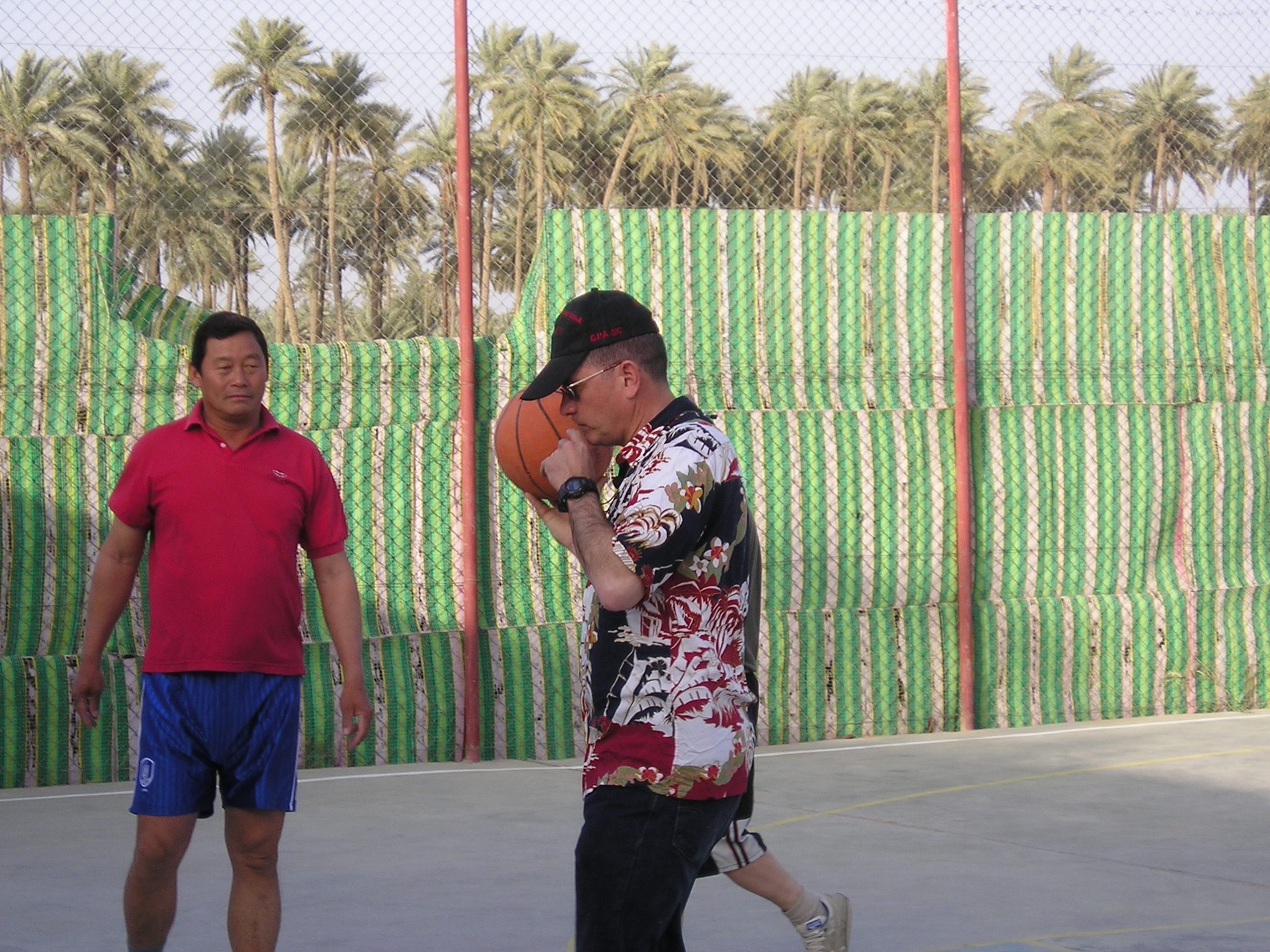
    During my last three days at CPA [Coalition Provisional Authority] in Hillah KBR [Kellog, Brown, & Root, our life support contractor] set up a basketball tournament. 3-on-3, half-court, 12 points or 15 minutes, whichever came first. A regular basket was one point, a three pointer counted two. The tournament had 16 teams, double elimination, which meant we had to play ten games a day for three days. Each day lasted almost three and a half hours. I refereed every game. For the first and hopefully only time in my life I wore a pistol while I was a basketball referee. I didn't need to draw my pistol during the three days, but a few times I felt like it.

    We had five Gurkha teams, two Iraqi teams and the rest were Americans with a few Aussies thrown in. At my suggestion, they let the Iraqi workers on the compound watch the tournament. Each team was limited to four total players. Mr. Gfeller's PSD had two teams, the MP's entered a team, Operations had a team and KBR had two teams.

    “KBR set up lights, a mobile microphone for me, and played music during the intermissions. A large number of fans turned up every day. The Iraqis cheered loudly for their fellow Iraqi teams, but shifted to the KBR favorite team when their comrade teams fell out. Only a few of the Gurkhas understood English well, and almost none of the Iraqis did. I had a hard time explaining the rules at times.

    Of course, those that best understood the rules also knew how to break them. The Gurkha and Iraqi games were exciting, sedate and polite affairs. The Americans played street basketball. Not all of my calls were popular. I heard irate protests from fans and players alike. Although I did not use the technical foul (foul shots did not play a part in the tournament), I did take advantage of the three foul limit per player. In one wild game, I fouled out five of the eight players on the two teams. Some people were MAD at me.”

“The favored KBR team won, to the delight of the Iraqi KBR workers. The fans went wild, and the KBR foreman, who played on the winning team, leaped on to the bed of a pickup loaded with Iraqis, held up his trophy, and jumped up wildly with them in celebration. It was a wild moment, where sports brought everyone together. We had a good time.

    I was exhausted. The next morning I left for Kuwait.”

Excerpt From

Messages from Babylon

Michael Whitehead

https://books.apple.com/us/book/messages-from-babylon/id407775151

This material may be protected by copyright.

Saturday, February 10, 2024

My Memory of the War in Iraq 20 years later: February 2024

“From: Whitehead, Michael (USA)

Sent: Friday, February 13, 2004 10:22 AM

Subject: Looking at Iran


    On Feb 11 we made our long planned and once canceled visit to the Iran/Iraq border. One of the three major crossing points from Iran into Iraq is in our sector in Wasit province, just north of Al Kut. We had heard many times concerns from many people, including Iraqis, about the lack of controls at the border. We decided to travel to the border to investigate ourselves.

At the Iraq/Iran border. In the background are the mountains of Iran.

    The visit called for traveling to Al Kut, spending the night there and then leaving for the Border the next day. While we were there, we linked up with Timm Timmons, the Deputy Governate Coordinator. Timm traveled with us to the border and was our guide. Timm is the lone American State Department officer in an office of British Foreign Office people. In fact, COL Strong and I call the Governate Coordinator, Mark Etherington, the Viceroy and Wasit the New Outpost of The British Empire.”


“The next morning we headed north for the border… The day we went to the border was windy and cold, with occasional drops of rain. In front of us and flowing toward us was a never ending stream of large 44 passenger buses and smaller minivans with luggage piled on racks on the roofs. They were all full of people flowing to and from the border.”


“Finally, through the haze of this blustery day, I saw them – the mountains of Iran. When we arrived at the border I saw a scene out of the television news, or a movie. The scene resembled the fevered chaos and organization of an ant colony. No vehicles could cross the border, so there was a laborious process of unloading the baggage from the vehicles on to carts for the walk across the border. Numerous men hired out themselves and their carts for this service. In some of the carts were even old women and children. The road in front of us filled with carts, pedestrians, vehicles and border guards frantically trying to clear a path for our vehicle. For some reason in this culture otherwise indolent police or security officials will spring into action at the sight of a Coalition vehicle, especially if it involves ordering other Iraqis out of our way.


    The Iraqi Customs building was built in the shape of a little fort, with turrets. The Customs Director spoke English, and briefed myself, COL Strong and Timm Timmons on his situation. He had a list of complaints and items he needed which he immediately supplied to Timm. The Director said that he was stamping passports. I wanted to see the process and Timm did too, so we walked out of the building and toward the border. The crossing was a cut in the land about the size of a two lane road, with a strip of barbed wire down the middle. On the right a stream of people walked toward Iran. On the left, a stream of people came into Iraq. We followed the stream toward Iran.


    After 75 meters we came to a mud hut about the size of our bathroom. Inside were a wooden table and one Iraqi Customs official with a date stamp. If you wanted your passport stamped he would do so, but only a few applied for this service. No one was checking the baggage. Some of the people coming into Iraq were refugees who had fled Saddam. They had no passports, and were very happy to see Col Strong's and my uniform. To a number of people I pointed to the flag on my right shoulder and they nodded happily. COL Strong took a picture of a family walking by, and then showed the digital image to them, to their great delight. Timm did not dress for the weather, and was freezing, so we headed back. As I looked back, I could see about 200 meters away the Iranian border crossing point.

Lt Alicia Galvany and I at the “passport office” on the Iraq/Iran border.

    While I was away, my troops had made friends with the Iraqi border guards, who had not been paid for five months. They posed for pictures. Before we left, we gave them a case of our MRE's to eat. On the way out the road turned into Iraqi gridlock, as it has in so many other places in Iraq. As I had done before in such situations, I got out of the vehicle and walked forward, pistol in hand, to clear a path through the ant bed. I led both vehicles out of the confusion and then got back into my seat for the trip back to Hillah.

A memorable day.”


Colonel Bede Strong, of Her Majesty’s Army, and I on the banks of the Tigris River in Al Kut, Iraq. This was our last visit to that city


Excerpt From

Messages from Babylon

Michael Whitehead

https://books.apple.com/us/book/messages-from-babylon/id407775151

This material may be protected by copyright.


Wednesday, January 10, 2024

My Memory of the War in Iraq 20 years later: January 2024

 “From: Whitehead, Michael (USA)

Sent: Saturday, January 24, 2004 5:36 PM

Subject: Alan Prizzey, CBS News, reporting


I saw a familiar face in a crowd of news people at the Woman's Rights Center in Diwaniyah today. He identified himself as Alan Prizzey, CBS news. We ended up escorting them to Hillah and dropping them off with our press person at the Hillah Woman's Rights Center. I guess if I get to hang out with important news personalities that must make me important, too. Or does it?

Convoy briefing prior to departure from the Coalition Provisional Authority -
South Central compound in Al Hillah.

Earlier this week I stopped by the Abu Ghraib prison, which is on the western outskirts of Baghdad. A miserable US MP Company was condemned to supervise the Iraqi guards and prisoners in this former model of Saddam's fascist society. Inside the prison are prisoners who have violated Iraqi law. Outside is a barbed wire encircled Stalag 17 only with tents. At the corners are guard shacks with machine guns. I didn't see any German shepherds. The guards on the camp were MP's, and inside were "security detainees", or persons who have committed crimes against the Coalition forces. If you rob a fellow Iraqi and get caught, you go inside the prison. If you take a shot at a “GI and survive to get caught, you go in the barbed wire camp.

At a meeting ceremony in Al Hillah. I am surrounded by students of the local university.

I haven't been in too many prisons, and I imagine that old prisons, like this one, look even grimmer than usual. An MP assigned there told me that when they first arrived the inmate areas of the prison were covered in several feet of human excrement, and the prison under Saddam had been packed to overcapacity. I'm sure it was a charming place to live and work.


 Two Ukrainian sailors are imprisoned there for smuggling, and they were the purpose of my visit. A Ukrainian Army Officer works here at CPA with me, and he asked to be taken by the prison during our visit to Baghdad so he could check on his countrymen.


 Jan 21 marked the 10 month anniversary of my arrival in the Middle East. I am ready to come home.”


Excerpt From

Messages from Babylon

Michael Whitehead

https://books.apple.com/us/book/messages-from-babylon/id407775151

This material may be protected by copyright.