Sunday, July 26, 2015

Mass Care in Alaska

Every state has mass care challenges but Alaska has some unique ones. I learned a lot about the intricacies of feeding and sheltering survivors in The Last Frontier during an Emergency Management Assistance Compact (EMAC) deployment July 6-22, 2015. Alaska asked for a Mass Care Coordinator and a Voluntary Agency Liaison (VAL) to assist with the Sockeye Fire that had affected Willow, a small community about an hour and a half north of Anchorage. Alaska picked me for the mass care job and Laurie Levine, a Red Cross employee who work with the state of Maine, as the VAL.

Former Daytona Seabreeze HS & fellow UF Gator alumni Amanda Loach,  now with the Alaska Homeland Security & Emergency Management, checking the information board at the Willow Community Center. 
Upon arrival Laurie was busy assisting the Willow community with the intricacies of long-term recovery and the case management process. When the mass care response ended after the first week I was able to make myself useful by writing initial drafts of state mass care plans and procedures. In my estimation the state did a good job with the mas care portion of the Sockeye Fire response because they had dedicated and competent professionals working not only in the State EOC but with the non-governmental organizations in the field.

Unfortunately, the Sockeye fire response is to a 9.0 earthquake response as a pick-up baseball game is to the World Series. And to their credit, the Alaskan emergency managers I spoke to knew it. They learned this lesson during the 2014 Alaska Shield exercise held to commemorate the 1964 earthquake that rocked Anchorage. They realized that because they weren't prepared for a catastrophic mass care response, a lot of the response activities defaulted to outsiders who stepped into the void to do what had to get done. They wanted to stay in control of the mass care response no matter how big the event.

So what to do?

In the face of a catastrophic mass care event a state can react in one of two ways. In the first instance, they could wring their hands, complain that they're not resourced for this kind of thing, and insist that FEMA and the Red Cross take over their mass care response. Of course, when the response is over they can complain that FEMA and the Red Cross did it all wrong, spent too much money and took too long to get everything done.

The second choice would be to write the mass care plans and procedures that would allow the state to absorb the extra personnel required for a catastrophic event and yet still remain in control. After the lessons of Alaska Shield they decided to pursue this choice but didn't have the expertise to write the necessary plans and procedures.

Fortunately for them, I LOVE to write mass care plans and procedures. I'm serious. I had a ball. I sat down with my Alaskan counterpart, Debbie Reed, and talked about the one week of the response that I had been able to observe in Alaska (I also was able to listen to some of their conference calls while I was still in Florida). Debbie was keen on getting a state shelter plan. Based on what I had observed of their response, I thought that they would benefit from having written procedures for their mass care response. And with that Debbie turned me loose.

Most of what I did was copy and paste from templates and plans in my vast repertoire of electronic mass care documents. Then I went through and edited out non-Alaska terms (like "Florida" and "ESF 6").  Using this process I put together a first draft of the first ever State of Alaska Shelter Support Plan. This draft had all the easy parts of the plan: Purpose, Scope, Assumptions, Situation, and a start on the Concept of Operations. 

During the final out-brief to a room full of stakeholders I told them, "I did the easy part. I outlined the state shelter support tasks they must be accomplished during the various phases. You guys need to get together and decide which agency or agencies are responsible for each task. That's the hard part."

Next I turned to writing a standard operating guide (SOG) for the Alaska mass care response. The first step in that task is to ask: Where does mass care fit within the Alaska state emergency operations center structure? The answer to that question should be in the State Emergency Operations Plan (EOP). The EOP said that the State Mass Care Coordinator (Yay for Alaska for writing a SMCC into the Plan) would activate a Mass Care Task Force when required.

During the Sockeye response they established the State Mass Care Task Force with four active subcommittees; Feeding, Sheltering, Volunteers & Donations and Pets. By the time I arrived each of the Subcommittees and the Mass Care TF were having weekly conference calls.

The Alaska State EOC is run according to the Incident Command System (ICS), with an Incident Commander and General Staff. Their Plans Section published an Incident Action Plan and I attended the 11 AM Tactics meeting. In the Tactics meeting they drew up the EOC structure according to the diagram below.


Alaska Mass Care Group within the State EOC Organization
When the time came to write the SOG I asked if we could change the name "Mass Care Task Force" to "The Mass Care Group". This way the name would be within the ICS convention and we would change the names of the Subcommittees to Task Forces. An advantage of this change would be that when we created the Mass Care Group catastrophic organization structure the outsiders who came in to help Alaska would more readily understand the task force concept than the idea of subcommittees.


Debbie Reed (L), Alaska State Mass Care Coordinator and Amanda Loach (R). On the white board behind them is the "Mass Care Group" notation  from the Tactics meeting.
With that settled, I came up with various options for how the Mass Care Group could be structured and showed these options to Debbie so that she could pick what she thought best suited Alaska. Based on her feedback we created 3 structures: State Response, Federal Declaration Response and Catastrophic Response. The Federal and Catastrophic Response structures allowed for an increasing number of personnel to be assigned to the Mass Care Group but the Group would always operate under the direction of the State Mass Care Coordinator. All of this was outlined in the draft Alaska Mass Care Group Standard Operating Guide.

When required, and based on criteria that they will develop, mass care task forces will be activated within the Mass Care Group. The mass care task forces will have task force leaders who will report to the State Mass Care Coordinator. Each task force will do planning and coordination for their assigned functional area. So that the task forces would have operational procedures to guide them I drafted a 3rd document, The Alaska Mass Care Task Force Standard Operating Guide. The SOG drew heavily from the Generic Mass Care Task Force SOG.

These 3 documents were not drafted in isolation. During my first week in Alaska I was joined by John Fulton, the FEMA Region 10 Mass Care representative. John and I knew each other from Sandy and we discussed the concepts outlined in the 3 documents.

As I was drafting the documents I also consulted frequently with Kelley McGuirk, the Regional Disaster Officer for the Alaska Red Cross, and Jenni Ragland, the Emergency Services Disaster Director for the Alaska Division of the Salvation Army.


L to R, Laurie Levine (ARC), Jenni Ragland (TSA), Kelley McGuirk (ARC) & Amanda Loach (AHS&EM) 
I admittedly gave them a lot of information to digest in a short period of time. It will take months for them to absorb these documents and determine how they should be modified to best suit Alaska. As everyone would agree, it's a lot easier to edit and document than create one from scratch.

The whole experience of my time in Alaska was positive and educational. Never before, and possibly never again, will I attend an emergency management meeting where Dog Mushers are an item on the agenda. I am grateful for the kindness and courtesy that was extended to me by everyone that I met in Alaska. 

Sunday, June 14, 2015

Who pays for mass care?

A good friend has a saying: "Whenever anyone says that it's not about the money, you better believe that it's all about the money."

At the Hot Wash discussion at the end of last week's 2015 National Mass Care Exercise in Austin, TX we started a discussion about how mass care responses in large or catastrophic events are paid for. Actually, I made some statements about the topic and this generated a discussion.

Chad Ostlund from Minnesota Emergency Management briefs Texas senior leadership during the National Mass Care Exercise in Austin, TC, June 2015.
I'm going to lay out what I said but first the general reader (i.e. one who isn't a mass care or emergency management professional) will need some explanation to provide context for the discussion. By mass care we mean the provision during disaster of food, shelter, emergency supplies and family reunification. By disaster we mean the range of natural and man made incidents from a house fire to a Category 5 hurricane.

Most of the time mass care resources are provided by the Voluntary Agencies Active in Disaster (VOAD) using funds that have been donated to them for that purpose. During blue skies the VOADs receive donations that they use to pay for salaries, training and exercises so that during gray skies they will have the capability to respond. When disasters happen the appeals go out to the public for donations to pay for the additional costs of the response. Big responses, with lots of exciting video footage of destroyed buildings and dazed survivors, generate a much broader and deeper response from the public than a smaller incident that may only make the  newspaper in their community. The result is that the VOADs often pay the mass care response costs for the smaller or less publicized disasters with blue sky money.

The old emergency management joke defines a disaster as when a tree falls on your neighbor's house and a catastrophe is when a tree falls on your house. Regardless of whether the disaster is federally declared or not, or whether the storm made good video for the Weather Channel, when the tree falls on your home and you're poor and uninsured you've got troubles. And if your county ended up on the list as declared for federal Individual Assistance, the maximum amount that FEMA can give you is $31,000. The average handed out by FEMA is only about $5,000. The VOADs are left with the task of matching the donated dollars they've received with the unmet needs of the survivors.

The gray sky money donated by the public, whether through the "Text $10" appeals or by other means, must pay for response costs as well as the unmet needs of individual families that are uncovered  through case management during recovery. One VOAD indicated that two thirds of the gray sky money that they receive arrives within 5 days of the event. The pot of money that each VOAD can devote to a disaster is therefore fixed and finite, and most of the donated dollars arrive early in the disaster.

Some state and local government aren't inclined to help out during the mass care response. In one of the many storms of my past a member of the Governor's staff, who shall remain nameless, asked me, "Why are we giving truckloads of bottled water to the Red Cross?"

"Because they're handing out the water to our citizens," I replied.

"They should buy their own water with the money the federal government gives them," said the staffer.

"The federal government isn't giving the Red Cross money."

"Oh, yes, they are."

"But really, they're not."

"Oh really, they are," said the staffer in a tone that was meant to conclude the conversation.

Fortunately, someone other than me was able to educate the staffer and the Red Cross got their truck of water.

In another state and another disaster I had an emergency manager question my request to send a truckload of water to the Salvation Army. "Why should we send them a truck of water?" he asked.

"Because they're handing out the water to your citizens," I replied.

The EM frowned. "That community already has ways to get their own water."

I nodded my head and walked away. Fortunately, someone other than me was able to educate the EM and the Salvation Army got their truck of water.

This sets the context for the statements that I made at the conclusion of the National Mass Care Exercise. My contention (and I am not alone in this belief) is that during a federally declared disaster the state government, to the extent responsible, should support the activities of the mass care VOAD agencies through the purchase of logistics and supplies. Examples of logistics that can be provided are forklifts, pallet jacks, portalets, dumpsters, bulk water, propane and diesel. Examples of supplies are bottled water, ice, shelf stable meals. baby supplies, shelter supplies and food for preparation at the field kitchens.

In a large disaster the costs for these items would be millions if not tens of millions of dollars. Whether the state purchases the resources or asks FEMA to do so 75% of the costs are a federal responsibility. And for every dollar of response costs absorbed by government there is another dollar available to the VOADs weeks later to help meet the unmet needs of the survivors.

"So why should the states help out the VOADs during the response?" you ask.

So that they can use the money they save to help the survivors when the government is not in a position to do anything more. And that's a good strategy for any government to follow.

Monday, May 25, 2015

My visit to the Red Cross Mass Care and Logistics Institute

I have been invited to present at a training event for the Red Cross next month. The 2015 Disaster Mass Care and Logistics Institute will be held at West Chester University in West Chester, Pennsylvania, on June 4- 6, 2015. Hosted by the Mid-Atlantic Division of the Red Cross, they are expecting approximately 100 participants from South Carolina through New England. The audience will be composed of Red Cross staff, volunteers, partners and stakeholders.

The intent of the training is to prepare the participants for the upcoming hurricane season. The panel on which I will present will focus on large scale disaster responses similar to events such as Hurricane Sandy. This post is a preview of what I intend to talk about during my presentation. The statements that I make here apply to coordinating a mass care services response at the state level when affected by a large, federally declared disaster that overwhelms the capabilities of the state.


Red Cross staff receive a morning brief from Eric Jones (r) at the Disaster Relief Operation in Manhattan during Sandy.
The public now expects a World Class, Olympic Gold Medal response for every disaster. This is the new standard to which we all must aspire. We're not going to be able to modify this standard so we have to do the best we can to plan, train and exercise ourselves to success.

The state mass care response works better when the responding staff operates in accordance with well understood and rehearsed operational procedures. During the State Hurricane Exercise in Tallahassee last week the Emergency Support Function (ESF) 6, Mass Care staff practiced using our procedures in response to a large, federally declared disaster. The State ESF 6 Standard Operating Guide (ESF 6 SOG)  divides the work into Operations and Planning. Most of the ESF 6 staff in the EOC performs Operations related duties. The Time Horizon of the tasks that they are performing are for TODAY and TOMORROW.


The ESF 6 Planning tasks are managed by the State Mass Care Coordinator. The Time Horizon for these tasks are 48 hours from NOW and beyond. The diagram below, reproduced from the ESF 6 SOG, lays out the two critical tasks related to ESF 6 Planning: the Initial Estimate and the Situation Analysis.


A state can call these tasks by different names and use their own processes to complete them but they must address these tasks because they provide the answers to two fundamental questions faced by the State Mass Care Coordinator in a large, federally declared event: 1) Do I have enough stuff? and 2) How are we doing?

Question #1 addresses whether there are sufficient resources (personnel, equipment, teams and supplies) on hand or en route to feed, shelter, distribute supplies and reunify families in the affected area considering the size of the disaster. If the answer is YES then the State Mass Care Coordinator monitors and reports. If the answer is NO then she needs to do something about it. The way to get to YES/NO is to use the Initial Estimate Process (see diagram below).


This diagram comes from a brand new FEMA course that has been in development for over 5 years. The course, called the Mass Care/Emergency Assistance Planing and Operations course, is 2.5 days long and will go a long way toward standardizing how we approach the state response to large, federally declared disasters. Every state should be talking to their FEMA Region about scheduling this course in a convenient venue.

Once the State Mass Care Coordinator finds out whether the answer to the first question is YES or NO he can direct attention to answering the 2nd question: How are we doing? If you want to know how you're doing you have to know where you're going and when you expect to get there.  


In most disasters when asked how we're doing we point to the number of people fed or sheltered, two reports that are readily available in most disasters.  But activity doesn't signify progress. During Planning we need to define our Operating Priorities, the outcomes expected from those priorities and a metric to use to gauge our progress. When the disaster starts we agree on dates at which these outcomes will be accomplished. The table on page 13 of the ESF 6 SOG shows the Mass Care Operating Priorities, Outcomes and Metrics that we have assigned in Florida. States should work with their partners to establish priorities, outcomes and metrics suitable for their jurisdiction.

How is the State Mass Care Coordinator supposed to be figuring out all of these estimates and metrics in the middle of what is likely to be the biggest disaster of her career? To get the job done at the Olympic Gold Medal standard that is expected she needs to bring in more staff through mutual aid as well as the voluntary agencies and FEMA. How are all these new people going to be organized and put to good use? They will be grouped into mass care task forces, by function.


For the last 3 years the national mass care community has been conducting National Mass Care Exercises (NMCE) in order to figure out how to organize these task forces and integrate them into the state mass care coordination process. This year the NMCE will be held in Austin, TX, June 7-11. Next year the Exercise is planned to be held in Missouri.


The role of the mass care task forces is to assist the State Mass Care Coordinator to perform the necessary planning and coordination. The diagram below, extracted from a document entitled White Paper – Mass Care Task Force Structure and Function, shows the different actors in the state coordination process and how they are supposed to interact.


The key word in that last sentence is "supposed." This state coordination process is not only complex but new and not totally refined. We're doing better with each exercise and we hope to improve our understanding of the process even more next month in Texas.

This state coordination process diagram does show some concepts that I have previously laid out in this post. The tasks in this process are divided between operations and planning. The mass care task forces perform coordination and planning under the direction of the state mass care coordinator. The objective of this process is to acquire, prioritize and allocate resources and information to the Supported Agencies.

A concept that has been difficult for many people to grasp is that when the disaster comes the task forces will be staffed primarily by personnel brought in from out of state. The affected state has little choice in this matter because all of their available mass care personnel will be swept up in the response. There are few people in the nation with the knowledge, expertise and experience to work in a mass care task force during a large disaster. But with every NMCE we conduct the pool of people who are familiar with the proposed state coordination process grows.

To further grow this pool of mass care specialists we must standardize the organization and processes by which we run these task forces. Once standardized, and we are achieving that goal with every NMCE we conduct, we can teach a growing cadre of mass care Jedi Knights so that they will be available to respond to requesting states when the Big One hits. 

The diagram below, from the same White Paper, shows a sample organization for a mass care task force. This organization was incorporated into a Generic Mass Care Task Force Operational Procedure that can be utilized by responding task force leaders who arrive to assume a position in a state that does not have their own procedures. Right now, that is the situation in most of the states in the nation.

As you can see, state mass care coordination in a large, federally declared disaster is not a simple process. We have made a lot of progress but we still have a long way to go. To facilitate the way forward three things must happen: 1) States must identify a State Mass Care Coordinator, 2) the new Coordinators and their voluntary agency liaisons need to be trained in the FEMA MC/EA Planning and Operations Course, and 3) Trained State Mass Care Coordinators must be given priority by FEMA Headquarters for funds to travel to future National Mass Care Exercises.

With the proper encouragement I see no reason that the national mass care community cannot get this done.

Sunday, April 19, 2015

The National Mass Care Exercise, June 7-11, 2015, Austin, TX

After 3 years of holding the National Mass Care Exercise in Tallahassee we're holding the 2015 Exercise in Austin, courtesy of the Great State of Texas. Planning is already underway for Missouri to host the Exercise in 2016 and we are looking for a state in the FEMA Region 5 area (the MidWest) to play as host for 2017. After action reports on the previous Exercise are available on the State of Florida Mass Care website.

We have been working on planning the Texas Exercise since last August. Because of my record of putting on 3 successive exercises with no budget or staff, I was asked to help out with the planning for this year's exercise. I agreed because I'm all about training up the rest of the country in state mass care coordination so that they will be ready to come to Tallahassee and help me when the Cat 5 hits Miami.

The site selected at Camp Mabry National Guard base for the Shelter & Feeding Task Forces.
The National Hurricane Conference also happened to be in Austin this year so we took advantage of the fact that a number of key out-of-state planners (including myself) were attending the NHC to hold some meetings and on-site visits with our Texas partners (or podnuhs, as they say in the Lone Star State). We visited the State Operations Center (SOC), housed in a 1953 era underground bunker as well as Camp Mabry, the location selected to house the 3 mass care task forces that will be established and operated during the exercise.

Texas Division of Emergency Management &Texas National Guard show
State, VOAD and FEMA visitors the Camp Mabry site.
A major purpose of the current and former Exercises was to continue development of the mass care task force concept. The basis for the structure and function of a mass care task force was outlined in a White Paper in December 2013. The White Paper summarized the lessons learned from the 2012 and 2013 exercises, and the concept outlined in the White Paper was validated in the 2014 exercise.

Two major issues that were not resolved in the previous exercises, and will be a particular focus of the 2015 exercise, are coordination between the task forces and the linkage between the task forces and the state operations center. Camp Mabry, the location of the mass care task forces, is at some distance from the SOC and this will provide some challenges in maintaining a common situation awareness at both locations.


A state establishes mass care task forces when the size of the disaster overwhelms their ability to coordinate an effective response. In 2004 we tried to meet the demand for additional mass care coordination by drafting state workers for the job. This solution was less than satisfactory. In big disasters we need augmentation by skilled emergency managers and mass care subject matter experts. The only way to get these people is to bring them in from out of state. How do we organize and employ these additional personnel? We establish mass care task forces.


These task forces will be much more effective if the incoming people are trained and exercised on a common mass care task force structure and function. That's the process that we started in Florida, will continue in Texas this year and carry forward in Missouri next year.

Plus, the exercise will be a lot of fun. All the cool people will be there. I'm looking forward to it.


Monday, March 02, 2015

How I came to write a war novel

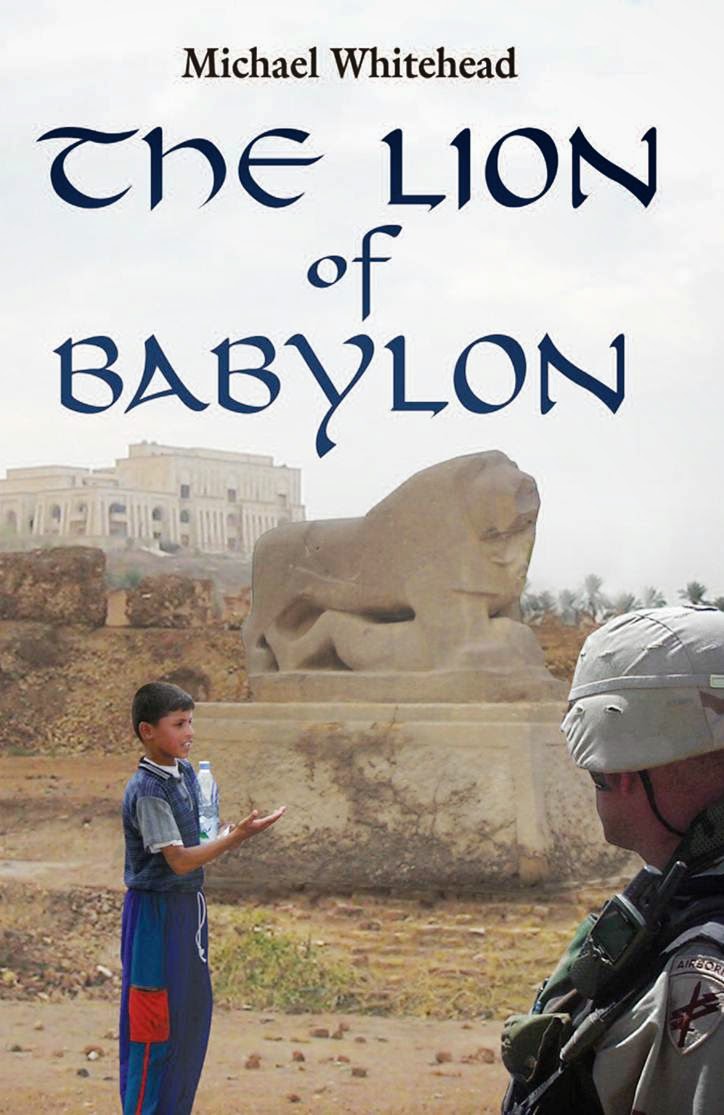
I wrote a novel about the war called The Lion of Babylon and the book has just been published. I thought that I would take the time to say how I came to write this novel.
The Lion of Babylon, a novel by Michael Whitehead

After training and preparing for a war for 26 years in the Active Army and Reserves I concluded that I would never see combat. I remember the moment that I reached this conclusion. The week of July 4th in 2001 I stood on Daytona Beach with my family and gazed at the thousands enjoying the sand, surf and sun. I was struck at how fortunate we were (me, my family, all of those people on that beach). Our nation was at peace and the Cold War, with the threat of thermonuclear destruction, had fizzled to a halt a dozen years before. The Clinton Administration had just concluded eight years of turning guns to butter. I was going to finish my time as a soldier and move on to doing something else with my weekends once a month.

Two months later came 9/11 and our world changed. Since I was a member of the Armed Forces of the United States at the time my life changed a little bit more than others.

All my life I've had the ambition to write and publish a novel. In 1994, at the age of 41, I decided that that I was going to do it. I took an FSU Continuing Education Class with Pam Ball (author of the novel Lava) called "Novel Writing" (or something like that). When the class ended I banded together with some of my classmates and formed a writers group. We started writing, meeting and critiquing each other's stuff. I remember Judge Terry Lewis was a member of our group and he was working on what would become his first novel Conflict of Interest. Over two years I wrote an 80,000 word novel called Every Man was Free, a dystopian tale about the survivors of a plague searching for a vaccine. Nobody would publish it.

I wondered if maybe my ambition would be only half fulfilled. I would complete the writing part without getting to the published part.

Eight years later, as I sat and sweltered in the Iraqi desert, I told myself that there had to be a novel somewhere in that experience. Since I had little entertainment to fill my free time I wrote long email stories to my family and friends. These emails were forwarded, as they are wont to be, and soon I had dozens of strangers contacting me and saying how much they enjoyed my stories. A lady said that I should make them into a book. So I did. An Army friend who served with me in Iraq, Craig Trebilcock, wrote a novel about Iraq called One Weekend a Month and published it using a Print on Demand publisher called Booklocker.com.  He said that he had a good experience with them. In August 2006 I used them to publish my memoir on my Iraq war experience, Messages from Babylon.

I returned home from Iraq in April 2004, returned to work in May and, according to my notes, started working on a novel about the war in June of 2004. I can be precise about the date because I started a Journal and the opening entries were in June. Whenever I had problems with the novel (and that was too often) I would return to this Journal, which was a Word document named "Notes." I still have it. It's 61 pages long.

I started the Journal because I had an Idea but I didn't have a Story. The Idea came to me in Iraq: if we had the foresight to see the death of a fellow soldier, what would we do with the information? Could we change the outcome? What if our actions resulted in a worse outcome?

This is a philosophical Fate vs Free Will discussion that doesn't need a war to lend it context. At least, it doesn't for most people, but the concept came to me often when I was in Iraq. Most of the time we lived and slept on (relatively) protected compounds. When we got in vehicles to leave the compound the relative danger increased. The level of increase in the danger depended on where we were going.

Back here in the (relative) safety of the United States we get in a car and leave the relative safety of our home for the greater danger of the highway. In Iraq things were different. Before I left the compound I received a briefing on where the Bad Guys were blowing up and killing people the day before, loaded not one but two weapons and got in vehicles with other armed people. I still remember the harsh, metallic sounds of everyone around me chambering a round. And then when we left the compound we scanned our environment because we knew that there were people out there, somewhere, who wanted to kill us. This wasn't quite like getting in your car to go to work in Tallahassee.

And as I left the compound I always thought, "What would this day bring?" And after executing the same process for months on end the thought finally bounced back as, "What if you knew what the day would bring?"

There's a long, hard slog from an Idea to a Story to a string of sentences connected to paragraphs and pages and chapters and a completed novel. For the last nine years I have written and re-written this novel. I estimate that I wrote over 150,000 words and threw out 100,000. I joined another writer's work group and reconnected with Judge Lewis and Sam Staley, author of St. Nic., Inc., among other books. Over that time period I presented my work group with 3 different versions of the novel. They accepted the 3rd version, which means they either a) thought it was good, or b) decided that since I wasn't accepting their recommendations they would stop giving them, or c) they got tired of reading it.

The Story is about a young Iraqi boy who can see the future. He sees a vision that an American soldier will come and help him fulfill his lifelong dream of finding where his parents are buried. The source of the boy's power is the Lion of Babylon. Nine years ago I set up a website for the day when my novel was finally published. The site is thelionofbabylon.com. Go check it out.

Sunday, February 22, 2015

Florida is writing a State Multi-agency Reunification Plan

Last Thursday, February 19, 2015, we had our first meeting/webinar of the State Reunification Plan Work Group at the State Emergency Operations Center here in Tallahassee. Fourteen different local, state, federal, voluntary and nonprofit agencies were represented at the meeting and we identified several others that needed to be brought into the Whole of Community planning process.

Reunification is one of the four activities of mass care, along with feeding, sheltering and distribution of emergency supplies. For this reason Emergency Support Function 6, Mass Care would take the lead in coordinating reunification during a disaster and in drafting a multiagency plan.

I'm sure that this begs the question for a number of people: If we didn't have a State Reunification Plan before, then why do we need one now? One answer is ignorance, on my part as well as others. Reunification issues in a disaster often create the kinds of complex, multiagency problems that give emergency managers a headache and are difficult to write into a plan.. Another, and better, reason that we never had a plan was that there wasn't much written reference material available on multiagency reunification.

That is about to change. Fourteen months ago a national work group was established with the object of creating a Multiagency Reunification Plan Template. I was a member of this work group and I got to listen to numerous conference calls with a lot of smart people who knew much more about reunification than I did. My part in the drama was to help take this information and draft it into the Template.

The national work group finished the draft template and sent the document out to a wider audience for review and comment. We are using this draft Template here in Florida as a basis for our new Plan. By doing so, and including subject matter experts from the national work group on our Thursday call, we were able to get advice on some sticky Florida issues we encountered as well as some ideas for improving the national Template.

We will have a Reunification Workshop at the Governor's Hurricane Conference in Orlando in May in which we will talk about our progress in completing a State Reunification Plan and discuss some of the issues that I'm sure that we will encounter.

We also hope to have the Multiagency Reunification Plan Template completed and up on the National Mass Care Strategy website by this summer.